



How to transform culture into an endogenous resource for socio-economic development, preserve ethnic identity, and improve the living standards of the people remains an issue requiring mechanisms and policies to unleash cultural resources alongside dedicated support for preserving traditional heritage.
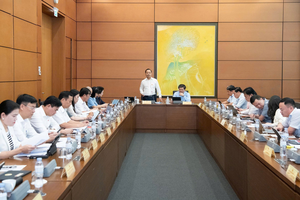
Resolution No.80-NQ/TW of the Politburo on the development of Việt Namese culture identifies cultural and human development as the foundation, an important endogenous resource, a great driving force, a pillar, and a regulatory system for the rapid and sustainable development of the country. Traditional culture receives sustained attention and guidance from the Party and the State for its protection, preservation, and promotion to lay a groundwork for national growth. In the current era, culture demands even greater focus through concrete policies, particularly as traditional values confront risks of erosion and younger generations show little eagerness to study, safeguard, and carry forward ethnic cultural heritages..jpg)
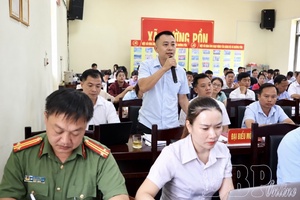
For culture to serve as a development resource for the nation, localities must implement concrete, reality-grounded solutions that enlist community participation.
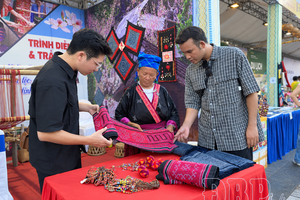
Điện Biên possesses a rich, varied storehouse of cultural heritage encompassing tangible and intangible systems. The entire province features 35 classified relic sites, including 1 special national historical relic site, 20 national-level relic sites, and 14 provincial-level relic sites. Relics span diverse categories distributed across the province, ranging from historical monuments and scenic landscapes to architectural-artistic and archaeological sites. More than 20,000 original artifacts preserved at the provincial Museum, the Điện Biên Phủ Victory Museum, and the Provincial Relic Management Board vividly reflect the distinct, multifaceted history and cultural identity of Điện Biên’s ethnic communities. Parallel to this is an abundant treasury of intangible cultural heritage, as each ethnic group preserves its own cultural imprint through spoken languages, scripts, folk beliefs, traditional festivals, handicraft trades, performing arts, folk instruments, and traditional games. Several traditional festivals of provincial ethnic groups are actively maintained, providing an environment for communities to perform folk arts, play traditional instruments, and enjoy folk games.
Despite its distinctiveness and richness, substantial cultural heritage faces the danger of oblivion and disappearance because knowledgeable practitioners are few, while the younger generation fails to follow in their footsteps. Artisans versed in traditional culture and crafts are growing elderly, lacking successors to receive instruction and carry on practical execution. Handicraft weaving for daily household items has declined under the pressures of the market economy, where mass manufactured substitutes abound. Crafting the panpipe, the tính lute, performing the panpipe dance, or blowing the pí flute receive little interest or study from younger cohorts. Even regarding written language, many people cannot write their own ethnic script. The transmission of folk songs, dances, and customs has yet to create widespread momentum and continuation.
Determining cultural conservation in conjunction with community-based tourism, the province has chosen to develop tourist culture villages such as Phiêng Lơi in Điện Biên Phủ ward, Nà Sự in Mường Chà commune, Bản Lồng in Quài Tở commune, and recently Tù Lu - Tìa Ló in Pu Nhi commune, alongside A Pa Chải in Sín Thầu commune. Visiting these cultural tourism villages, travelers take in scenic landscapes, explore customs, and experience distinctive ethnic cultural activities.
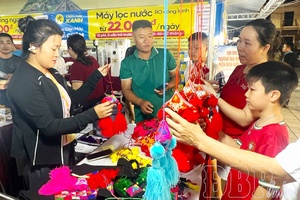
Tapping culture generates tourism development resources as residents tidy living spaces and hamlets, plant flower corridors along village entryways, and preserve traditional culture to present and perform for guests. Several households construct or renovate residences into homestays to welcome and serve visitors. Becoming tourism destinations allows locals to receive guests and introduce their traditional culture and cuisine to travelers from near and far, simultaneously preserving cultural heritage and generating income. Nevertheless, this does not represent a fully sustainable solution for conservation and unleashing cultural resources for development. Culture genuinely becomes a resource only when local citizens - as direct beneficiaries - assume responsible participation in preserving, safeguarding, and practicing traditional cultural identity.
.jpg)
The project “Preserving and Promoting the Fine Traditional Values and Cultural Identities of Ethnic Minorities Associated with Tourism and Economic Development in the New Era,” approved by the Ministry of Culture, Sports and Tourism under Decision No.2345/QĐ-BVHTTDL dated September 10, 2026, opens orientations to preserve and promote ethnic minority cultural values in mountainous, highland, and frontier areas. Endangered cultural values will be preserved in connection with practice, transmission, and value enhancement.
Accordingly, traditional culture is embedded within contemporary life, connecting with community tourism, cultural industries, the creative economy, and mainstream markets to create jobs, generate livelihoods, and raise incomes for local people. Cultural preservation serves as the foundation, value promotion serves as the goal, ethnic minority communities act as primary subjects, and the State fulfills guiding, enabling, and supportive roles. Ninety percent of traditional cultural assets and cultural spaces at risk of fading will be screened, inventoried, evaluated, and classified during the 2026 - 2030 period, prioritizing preservation and restoration support in disadvantaged areas and for ethnic minority groups facing particular hardships.
The project supports the development of 80 typical destinations in ethnic minority and mountainous areas, alongside 100 models for cultural preservation, creativity, and value promotion linked to sustainable livelihoods and tourism market connectivity. Funding for the project is allocated from the state budget, integrated with national target programs, and mobilized from other lawful sources.
Solutions and orientations for preserving and promoting traditional cultural values have been clearly established through guidelines, resolutions, and master plans from central to local levels. Concretizing these measures to suit each locality and ethnic community will help unleash cultural resources, propel socio-economic development, and improve the living conditions of the people. Harmonizing conservation with development, Điện Biên has been progressively elevating the value of its cultural heritage, turning culture into a vital resource for sustainable progress.
Hà Anh
.jpg)
.jpg)
.jpg)
.jpg)
.jpg)
.jpg)
.jpg)
.jpg)
.jpg)
.jpg)
You have 500/500 characters left
Please enter 5 or more characters!!!